

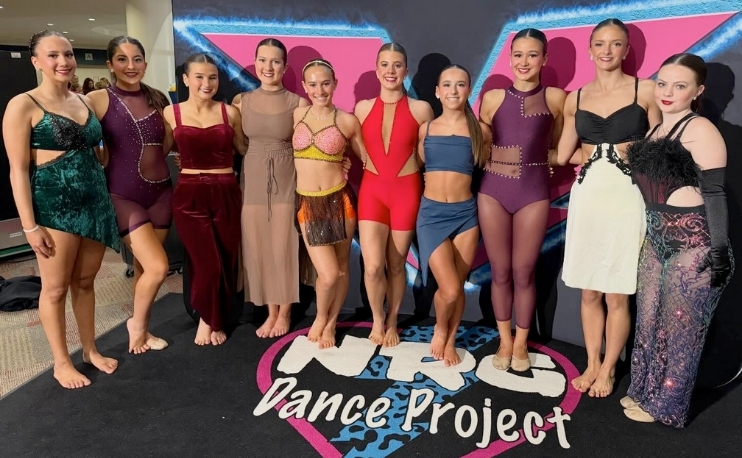
Music is often treated as background noise in movement-based classes. Something that plays while kids stretch, practice, or perform. But in both dance and gymnastics, music and rhythm are doing much more than filling silence—they’re actively shaping how students learn, remember, and move.
Whether a child is learning a dance combination or mastering a gymnastics sequence, rhythm helps turn unfamiliar movements into something the body understands. Continue below to learn more.
Rhythm Creates Structure Kids Can Feel
For young dancers and gymnasts, especially, learning new skills can feel overwhelming. There’s timing, body position, sequencing, and coordination happening all at once. Music gives those elements a framework.
When movement is tied to a beat, kids don’t have to intellectually process every step. Instead, their bodies begin to anticipate what comes next. This is why a child who struggles to remember a sequence without music often improves quickly once rhythm is added. The beat becomes a guide—almost like training wheels for movement.
In gymnastics, even though routines aren’t always performed to music, rhythm still plays a role. Counting, clapping, and timed cues help students understand pacing, momentum, and control. It’s not about dancing but about timing.
Music Improves Memory and Retention
Ask any parent: kids remember songs far longer than spoken instructions. That’s because music activates multiple areas of the brain at once.
In dance, music helps lock choreography into long-term memory. A student might forget the verbal name of a step but instantly remember it when the song starts. The music becomes a cue that triggers muscle memory.
Gymnastics benefits in a similar way. When skills are practiced with consistent counts or rhythmic patterns, athletes retain sequences more easily. This is especially helpful for longer combinations, where remembering order is often harder than performing the skills themselves.
Rhythm Builds Coordination and Control
Good movement isn’t just about strength or flexibility—it’s about control. Rhythm teaches kids when to move, when to pause, and when to shift weight.
In dance, this is obvious. Musical phrasing teaches students to transition smoothly, rather than rushing or stopping abruptly. Over time, kids learn how to move with intention rather than reacting late.
In gymnastics, rhythm helps with timing landings, controlling momentum, and connecting skills cleanly. Athletes who understand pacing tend to move more efficiently and with greater confidence, even on complex skills.
Music Helps Kids Stay Engaged and Motivated
Repetition can be boring. And repetition is unavoidable when learning dance or gymnastics.
Music helps soften that reality. It adds energy, emotion, and familiarity. Practicing the same skill doesn’t feel as repetitive when it’s paired with a song kids enjoy or recognize.
For younger students, especially, music can be the difference between zoning out and staying engaged. It gives them something to connect to emotionally, not just physically.
Emotional Expression Matters Too
Dance naturally emphasizes expression, but gymnastics benefits from it as well. Confidence, presence, and body awareness all improve when kids feel comfortable moving with rhythm.
Music allows students to explore how movement feels—not just how it looks. This builds confidence and self-awareness, which carries into performances, competitions, and even everyday posture and movement.
Kids who feel connected to what they’re doing are more likely to stick with it long-term.
Why This Matters for Parents
When choosing a dance or gymnastics program, it’s easy to focus on technique, levels, or competitive outcomes. But how kids learn is just as important.
Studios and gyms that intentionally use music and rhythm aren’t just creating fun classes; they’re also supporting deeper learning. They’re helping students understand movement in a way that feels natural, memorable, and motivating.
Over time, this leads to better coordination, stronger confidence, and a healthier relationship with physical activity.
Stay Tuned for More Dance and Gymnastics Insights from Tapio School of Dance and Gymnastics in Mount Pleasant
Music and rhythm aren’t extras in dance and gymnastics – they’re tools that help kids process movement, remember skills, and enjoy learning.
When movement is paired with rhythm, it becomes less about forcing technique and more about understanding how the body works. And that’s where real progress happens, both in the studio and beyond. Reach out to learn more.